
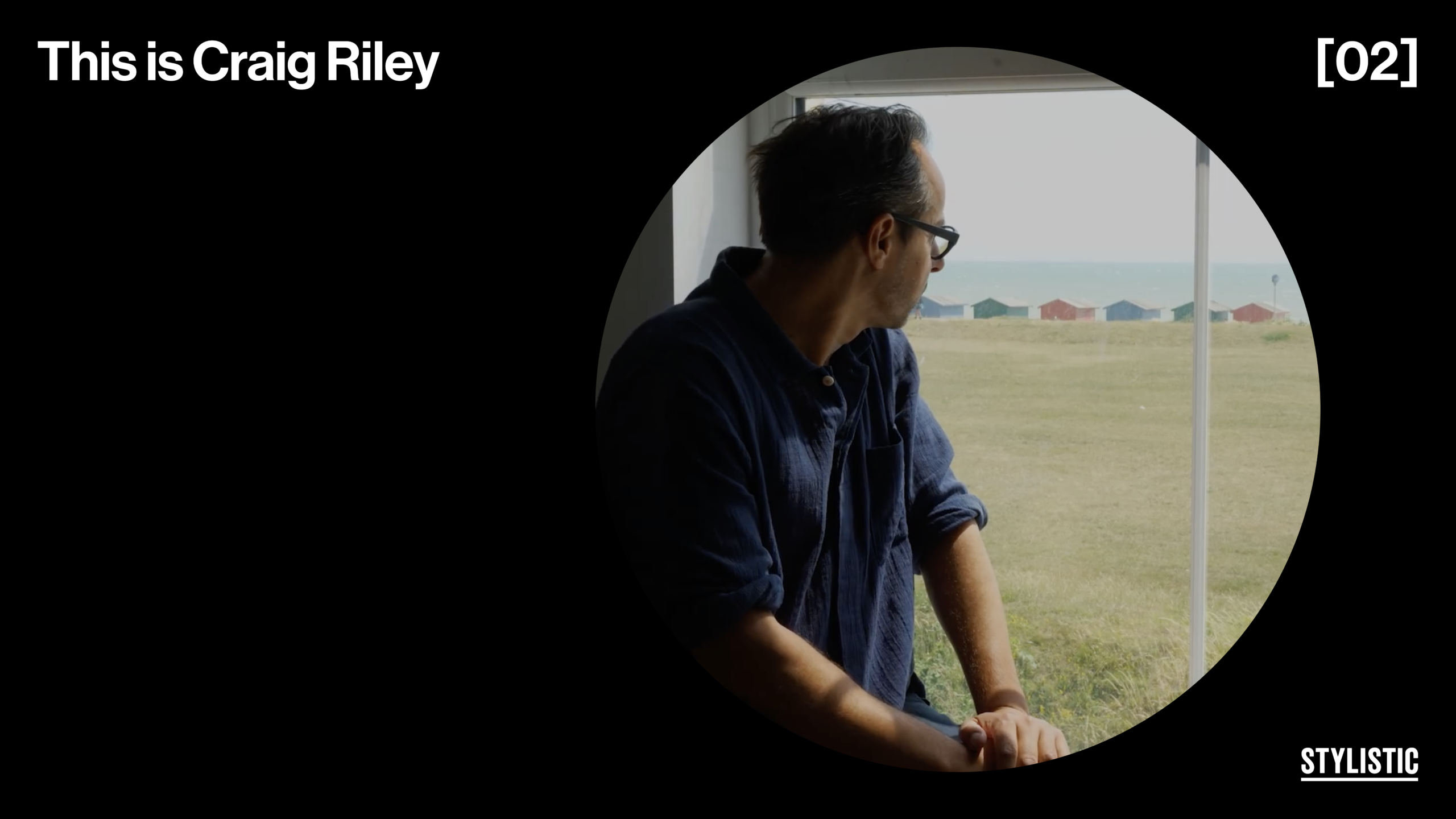
Think about the last museum you actually enjoyed.
You probably can’t remember being told where to go. You wandered, something caught your eye, one thing led to another, and you came out knowing more than you went in with. That feeling of finding it yourself doesn’t happen by accident. Someone designed it.
That’s Craig Riley’s job.
Twenty-five years, then a leap
Craig spent 25 years at Casson Mann, latterly as a director, on the kind of projects most designers get one shot at: the Musée national de la Marine in Paris, the Endeavour Galleries at the National Maritime Museum, Ocean Liners: Speed and Style at the V&A, and the Lascaux Centre International d’Art Pariétal in the Dordogne.
Then, three years ago, he set up on his own.
He’s refreshingly unromantic about what that was like. The second year was quiet. Nobody emailing, nothing in the diary. And he took on a studio anyway, before there was work to fill it, because that’s what it took.
studioRILEY has since been commissioned by the British Library.
It started with a locked gate
The instinct goes back to a childhood in Duffield, climbing over the gates of National Trust sites to find out what was on the other side, and the day he stumbled across a hidden cave.
He still designs for that feeling. Not a route you’re marched along, but a space that rewards the person who goes and looks.
Why he still builds things out of cardboard
Craig plans on walls and builds in cardboard. Not renders — models you can pick up, turn over and argue with.
His reasoning is hard to fault. A design that only exists on a screen can hide behind how good the screen makes it look. Pick it up and you find out whether it works.
Empire Road
Craig’s mother is Guyanese, his father a Derbyshire engineer. His uncle was Michael Abbensetts, who wrote Empire Road — the BBC series, first broadcast in 1978, credited as the first British television drama written, performed and directed predominantly by Black artists.
Craig is the reason there’s now a blue plaque in his uncle’s name.
That thread runs through how he talks about his work: who gets remembered, who gets to tell the story, and whose voices end up in the room.
Knowing where you are
He’s also open about his bipolar diagnosis, and about the scale he built for himself to track where he is on any given day — not to flatten the highs and lows, but to stay in touch with them.
Listening to him describe it, it sounds like the same instinct as the cardboard. Build something you can hold, so you know what you’re actually dealing with.
Have a listen
It’s a long conversation and worth the time.
This is Stylistic Stories. Conversations with people who make, build and create. Everyone has a story worth telling, and this is your chance to hear it.


